
I completed JetBlue's 25 for 25 challenge for $4,136, earning 365,000 TrueBlue points and 25 years of Mosaic 1 status by flying to 25 unique destinations in six months.
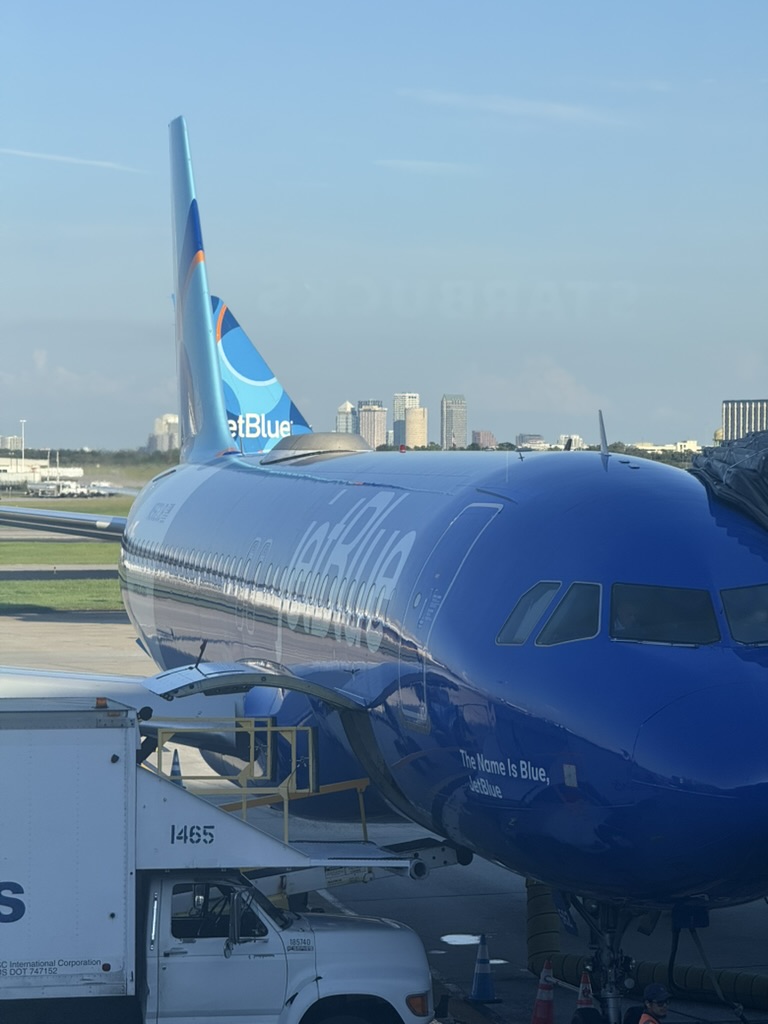
As 2025 is coming to a close, I wanted to recap something fun I did this year. I completed the JetBlue 25 for 25 challenge.
JetBlue launched this promotion on June 25, 2025, offering 350,000 TrueBlue points and 25 years of Mosaic 1 status to anyone who could fly to 25 unique JetBlue destinations by December 31.
I completed the challenge across five mileage runs, flying 30 total flights to hit 25 unique airports. The total cost was $4,135.99, effectively buying TrueBlue points at 1.18 cents per point while securing lifetime elite status.
Here's how I planned the routing, executed the runs, and maximized efficiency to complete one of the most unique travel challenges of 2025.
JetBlue's 25 for 25 challenge is a promotion launched by JetBlue on June 25, 2025. This promotion granted 350,000 JetBlue TrueBlue points, along with 25 years of TrueBlue Mosaic 1 status for people who complete the challenge.
To qualify, you needed to fly to 25 unique JetBlue destinations between the launch on June 25 and December 31, 2025. Connecting airports and arriving airports count, but departing airports don't count.
Participants earn rewards in milestones. Once you hit 15 unique destinations, you get 150,000 TrueBlue points. At 20 destinations, you earn an additional 250,000 TrueBlue points for 350,000 total. At 25 destinations, you earn 25 years of JetBlue Mosaic 1 status.
Therefore, if you just care about the TrueBlue points, you can earn them by completing just 20 unique destinations.
All flights booked in Blue status or higher qualify. Blue Basic does not qualify. Flights must be operated by JetBlue with your TrueBlue number attached.
This includes flights booked with TrueBlue miles or through a partner like Etihad, so long as the fare is not Blue Basic.
Since JetBlue isn't a global carrier but has a great presence in the Northeast US and the Caribbean, there's a clear strategy here.
Since arriving and connecting airports count toward the unique count and departure airports don't count, the strategy is to fly on as many multi-segment itineraries that connect through one of JetBlue's hubs.
However, in practicality, you'll almost certainly touch JetBlue's hubs more than once. It's not necessarily practical to look for as many connecting flights as possible.
The reason: JetBlue doesn't operate many, if any, point-to-point flights. As a result, you'll inevitably have to depart or arrive from a hub.
The strategy is to complete the challenge in as few dollars as possible.
JetBlue operates the following hubs:
Main Hubs:
Secondary Hubs:
The problem we ran into when trying to complete this challenge efficiently, with as little downtime as possible, is that you needed to essentially turn on the outbound flight to return back to the hub to make the timing of the next hub-and-spoke arrivals.
Here's what I mean: JetBlue operates three main departure banks at BOS—one in the AM, one in the early afternoon, and one in the evening.
If I wanted to fly from Boston to PIT, CLE, and PHL all in one day, I had no time to waste waiting for a possibly cheaper Delta flight from PIT-BOS that wouldn't get me back to BOS in time to make the departure for CLE to pick up another airport.
While this led to some inefficiency, it wasn't the end of the world. I kind of expected that.
In planning, I used many different tools including 25for25.ai, which helped me put together customized routing. Additionally, I used FlightConnections to help plan out routes.
I decided to tackle this in a few different "runs." Since I couldn't practically live on an airplane for a week, but I could go out on two or three day sprints where I checked off tons of airports in a short amount of time, I was able to structure it in various runs.
Below I'm going to explain the routing I took to get there, including the airports that were duplicates and didn't pick up an additional unique airport, along with all 25 airports:
Statistics
The 25 unique airports I hit in order: PWM, BOS, MVY, DCA, MCO, SDQ, FLL, CUN, TPA, HPN, ROC, JFK, BUF, SYR, PIT, CLE, PHL, SFO, PBI, LGA, SJU, STX, PUJ, EWR, RDU.
There were five flights to three unique hub airports that were duplicated and didn't count toward any metric: JFK, BOS (3x), SJU.
The total cost for the entirety of the challenge was $4,135.99, which was an average of $137.87 per flight all-in.
If we exclusively look at the flights that reached a new destination, the total cost was $3,537.47, and the cost per new destination was $141.50.
In essence, using the total cost of $4,135.99, I effectively bought JetBlue points at 1.18 cents per point (CPP). This is cheaper than The Points Guy's valuation of 1.45 CPP for TrueBlue points.
Not to mention this doesn't factor in the value I'll get from 25 years of JetBlue Mosaic 1 status.
My Mileage Runs
I completed the challenge in a few different mileage runs.
Run 0: Natural Travel
I naturally hit JFK-PWM on a trip with my significant other over the summer.
Run 1: The Caribbean Sprint
The first run I took with Zach from From the Tray Table. We went JFK-BOS-MVY-DCA-MCO-SDQ (overnight in SDQ airport lounge)-FLL-CUN-TPA-HPN.
Run 2: Northeast Hops
The second run was designed to be short, quick back-to-back hops across the Northeast, minimizing flight time and maximizing efficiency. I routed JFK-ROC-JFK-BUF-JFK-SYR (overnight)-BOS-PIT-BOS-CLE-BOS-PHL.
Interestingly on this run, the same aircraft operated JFK-BUF-JFK-SYR, and the same plane also operated BOS-PIT-BOS-CLE-BOS. This meant I'd be covered in case of any cascading delays.
Run 3: West Coast Work Trip
My next run was a work trip to SFO. I wanted to fly back and hit two more airports, which required me to fly United to reposition from SFO-LAX early in the morning.
I flew JFK-SFO, then SFO-LAX on United, and then LAX-PBI-LGA on JetBlue, picking up two more destinations.
Run 4: Caribbean Island Hopping
This had me at 20. I wanted to find a quick mileage run to pick up four more destinations, as I had a pre-planned trip to RDU to see my sister at school.
This planning took me to the JetBlue mini hub of SJU. I flew HPN-SJU-STX-SJU (overnight)-PUJ-EWR.
Interestingly, since STX (St. Croix) is outside the US customs zone, you need to leave the airport and re-clear customs and security once in St. Croix.
Run 5: The Finale
Finally, I finished by flying JFK-RDU.
Getting Credit
While JetBlue launched a 25 for 25 tracker online, after the flight posted to my account, it said I was only at 24 when my calculations said 25.
I called JetBlue support. They confirmed I hit 25, escalated to the loyalty team, and five days later my status and points posted to my JetBlue account.
The Results
Hello 350,000 TrueBlue points and 25 years of JetBlue Mosaic 1 status.
Since you also get perks you pick, I chose the additional 15,000 JetBlue points. In essence, I got 365,000 points for completing the challenge.
If we value those at TPG's 1.45 CPP, that would be worth $5,292.50. But I plan to use them for premium cabins on JetBlue partners like Qatar, Etihad, and JAL, so I'll likely get much more value from them.
The JetBlue 25 for 25 challenge was one of the most fun travel projects I've done. Completing it required strategic planning, efficient routing, and a willingness to live on airplanes for a few intense sprints.
At $4,135.99 total cost for 365,000 TrueBlue points and 25 years of Mosaic 1 status, the value proposition is undeniable. Buying points at 1.18 cents each beats TPG's 1.45 CPP valuation, and that doesn't account for the lifetime status benefits.
The sprint strategy worked perfectly. Rather than trying to complete this continuously, breaking it into five distinct runs made it manageable while maintaining efficiency. Flying the same aircraft on consecutive segments minimized delay risk.
If JetBlue ever runs a similar challenge, I'd recommend the same approach: plan strategically using tools like 25for25.ai, focus on hub-and-spoke routing, accept some inefficiency on positioning flights, and structure it in sprints rather than one continuous push.
This was worth every dollar and every hour spent in the air.
Share article


As 2025 is coming to a close, I wanted to recap something fun I did this year. I completed the JetBlue 25 for 25 challenge.
JetBlue launched this promotion on June 25, 2025, offering 350,000 TrueBlue points and 25 years of Mosaic 1 status to anyone who could fly to 25 unique JetBlue destinations by December 31.
I completed the challenge across five mileage runs, flying 30 total flights to hit 25 unique airports. The total cost was $4,135.99, effectively buying TrueBlue points at 1.18 cents per point while securing lifetime elite status.
Here's how I planned the routing, executed the runs, and maximized efficiency to complete one of the most unique travel challenges of 2025.
JetBlue's 25 for 25 challenge is a promotion launched by JetBlue on June 25, 2025. This promotion granted 350,000 JetBlue TrueBlue points, along with 25 years of TrueBlue Mosaic 1 status for people who complete the challenge.
To qualify, you needed to fly to 25 unique JetBlue destinations between the launch on June 25 and December 31, 2025. Connecting airports and arriving airports count, but departing airports don't count.
Participants earn rewards in milestones. Once you hit 15 unique destinations, you get 150,000 TrueBlue points. At 20 destinations, you earn an additional 250,000 TrueBlue points for 350,000 total. At 25 destinations, you earn 25 years of JetBlue Mosaic 1 status.
Therefore, if you just care about the TrueBlue points, you can earn them by completing just 20 unique destinations.
All flights booked in Blue status or higher qualify. Blue Basic does not qualify. Flights must be operated by JetBlue with your TrueBlue number attached.
This includes flights booked with TrueBlue miles or through a partner like Etihad, so long as the fare is not Blue Basic.
Since JetBlue isn't a global carrier but has a great presence in the Northeast US and the Caribbean, there's a clear strategy here.
Since arriving and connecting airports count toward the unique count and departure airports don't count, the strategy is to fly on as many multi-segment itineraries that connect through one of JetBlue's hubs.
However, in practicality, you'll almost certainly touch JetBlue's hubs more than once. It's not necessarily practical to look for as many connecting flights as possible.
The reason: JetBlue doesn't operate many, if any, point-to-point flights. As a result, you'll inevitably have to depart or arrive from a hub.
The strategy is to complete the challenge in as few dollars as possible.
JetBlue operates the following hubs:
Main Hubs:
Secondary Hubs:
The problem we ran into when trying to complete this challenge efficiently, with as little downtime as possible, is that you needed to essentially turn on the outbound flight to return back to the hub to make the timing of the next hub-and-spoke arrivals.
Here's what I mean: JetBlue operates three main departure banks at BOS—one in the AM, one in the early afternoon, and one in the evening.
If I wanted to fly from Boston to PIT, CLE, and PHL all in one day, I had no time to waste waiting for a possibly cheaper Delta flight from PIT-BOS that wouldn't get me back to BOS in time to make the departure for CLE to pick up another airport.
While this led to some inefficiency, it wasn't the end of the world. I kind of expected that.
In planning, I used many different tools including 25for25.ai, which helped me put together customized routing. Additionally, I used FlightConnections to help plan out routes.
I decided to tackle this in a few different "runs." Since I couldn't practically live on an airplane for a week, but I could go out on two or three day sprints where I checked off tons of airports in a short amount of time, I was able to structure it in various runs.
Below I'm going to explain the routing I took to get there, including the airports that were duplicates and didn't pick up an additional unique airport, along with all 25 airports:
Statistics
The 25 unique airports I hit in order: PWM, BOS, MVY, DCA, MCO, SDQ, FLL, CUN, TPA, HPN, ROC, JFK, BUF, SYR, PIT, CLE, PHL, SFO, PBI, LGA, SJU, STX, PUJ, EWR, RDU.
There were five flights to three unique hub airports that were duplicated and didn't count toward any metric: JFK, BOS (3x), SJU.
The total cost for the entirety of the challenge was $4,135.99, which was an average of $137.87 per flight all-in.
If we exclusively look at the flights that reached a new destination, the total cost was $3,537.47, and the cost per new destination was $141.50.
In essence, using the total cost of $4,135.99, I effectively bought JetBlue points at 1.18 cents per point (CPP). This is cheaper than The Points Guy's valuation of 1.45 CPP for TrueBlue points.
Not to mention this doesn't factor in the value I'll get from 25 years of JetBlue Mosaic 1 status.
My Mileage Runs
I completed the challenge in a few different mileage runs.
Run 0: Natural Travel
I naturally hit JFK-PWM on a trip with my significant other over the summer.
Run 1: The Caribbean Sprint
The first run I took with Zach from From the Tray Table. We went JFK-BOS-MVY-DCA-MCO-SDQ (overnight in SDQ airport lounge)-FLL-CUN-TPA-HPN.
Run 2: Northeast Hops
The second run was designed to be short, quick back-to-back hops across the Northeast, minimizing flight time and maximizing efficiency. I routed JFK-ROC-JFK-BUF-JFK-SYR (overnight)-BOS-PIT-BOS-CLE-BOS-PHL.
Interestingly on this run, the same aircraft operated JFK-BUF-JFK-SYR, and the same plane also operated BOS-PIT-BOS-CLE-BOS. This meant I'd be covered in case of any cascading delays.
Run 3: West Coast Work Trip
My next run was a work trip to SFO. I wanted to fly back and hit two more airports, which required me to fly United to reposition from SFO-LAX early in the morning.
I flew JFK-SFO, then SFO-LAX on United, and then LAX-PBI-LGA on JetBlue, picking up two more destinations.
Run 4: Caribbean Island Hopping
This had me at 20. I wanted to find a quick mileage run to pick up four more destinations, as I had a pre-planned trip to RDU to see my sister at school.
This planning took me to the JetBlue mini hub of SJU. I flew HPN-SJU-STX-SJU (overnight)-PUJ-EWR.
Interestingly, since STX (St. Croix) is outside the US customs zone, you need to leave the airport and re-clear customs and security once in St. Croix.
Run 5: The Finale
Finally, I finished by flying JFK-RDU.
Getting Credit
While JetBlue launched a 25 for 25 tracker online, after the flight posted to my account, it said I was only at 24 when my calculations said 25.
I called JetBlue support. They confirmed I hit 25, escalated to the loyalty team, and five days later my status and points posted to my JetBlue account.
The Results
Hello 350,000 TrueBlue points and 25 years of JetBlue Mosaic 1 status.
Since you also get perks you pick, I chose the additional 15,000 JetBlue points. In essence, I got 365,000 points for completing the challenge.
If we value those at TPG's 1.45 CPP, that would be worth $5,292.50. But I plan to use them for premium cabins on JetBlue partners like Qatar, Etihad, and JAL, so I'll likely get much more value from them.
The JetBlue 25 for 25 challenge was one of the most fun travel projects I've done. Completing it required strategic planning, efficient routing, and a willingness to live on airplanes for a few intense sprints.
At $4,135.99 total cost for 365,000 TrueBlue points and 25 years of Mosaic 1 status, the value proposition is undeniable. Buying points at 1.18 cents each beats TPG's 1.45 CPP valuation, and that doesn't account for the lifetime status benefits.
The sprint strategy worked perfectly. Rather than trying to complete this continuously, breaking it into five distinct runs made it manageable while maintaining efficiency. Flying the same aircraft on consecutive segments minimized delay risk.
If JetBlue ever runs a similar challenge, I'd recommend the same approach: plan strategically using tools like 25for25.ai, focus on hub-and-spoke routing, accept some inefficiency on positioning flights, and structure it in sprints rather than one continuous push.
This was worth every dollar and every hour spent in the air.



![The Pell by Hyatt - A Good Category 3 Hotel in the US [Full Review]](https://cdn.prod.website-files.com/6567c0c5bc227655220104ae/66e492dc44d15b3e96766dc7_1D99AF0E-99B9-4A09-B9BB-D7FB7D16712D_4_5005_c.jpeg)
